Uncategorized
What Is Ayahuasca? Ingredients, Effects, MAOIs & Risks
Oct
What is ayahuasca? Ayahuasca is a traditional psychoactive preparation associated especially with Indigenous cultures of the Amazon region.
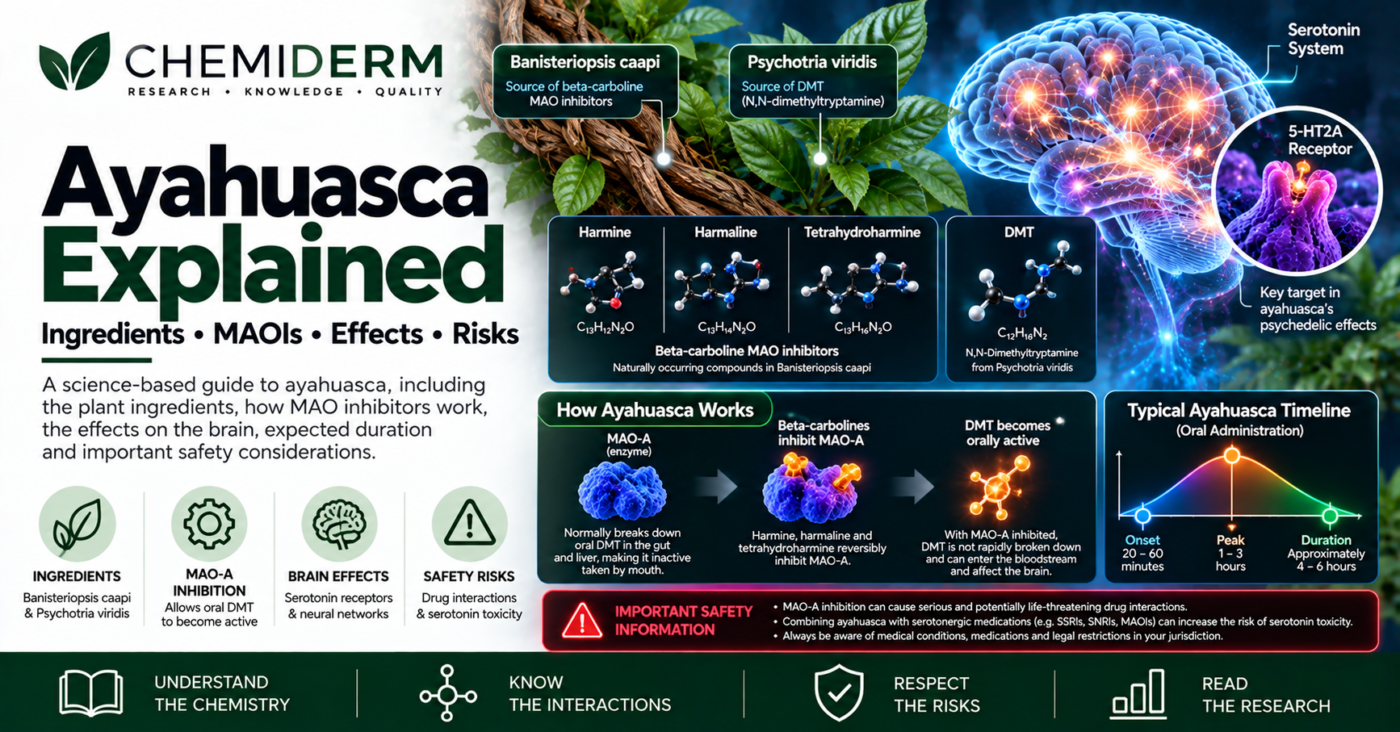
Classic preparations typically combine the vine Banisteriopsis caapi with a DMT-containing plant such as Psychotria viridis. The pharmacology is unusual because compounds in B. caapi inhibit monoamine oxidase A, or MAO-A, allowing orally consumed DMT to remain active.
Ayahuasca has attracted growing scientific interest because researchers are investigating its effects on consciousness, serotonin signalling, mental health and brain function.
However, it also carries meaningful risks—particularly because MAO-A inhibition can create dangerous interactions with certain medications and other psychoactive substances.
This Chemiderm guide explains the chemistry, ingredients, duration, effects and major safety considerations.
For more research-focused pharmacology content, visit Chemiderm.com.
What Is in Ayahuasca?
Ayahuasca is not simply another name for DMT.
It is a multi-component botanical preparation.
Two plants are frequently discussed in scientific literature:
Banisteriopsis caapi
Banisteriopsis caapi is a vine containing beta-carboline alkaloids such as:
- Harmine
- Harmaline
- Tetrahydroharmine
These compounds contribute to inhibition of monoamine oxidase, particularly MAO-A.
Psychotria viridis
Psychotria viridis is one commonly used DMT-containing plant.
Its relevant psychoactive compound is:
N,N-dimethyltryptamine (DMT)
DMT is a serotonergic psychedelic that interacts with several serotonin receptor systems, including the 5-HT2A receptor.
Why Doesn’t Oral DMT Normally Work the Same Way?
DMT is normally broken down very efficiently by monoamine oxidase enzymes in the gastrointestinal tract and liver.
This means swallowed DMT by itself is usually metabolized before enough reaches systemic circulation to produce the characteristic psychedelic effect.
Ayahuasca changes this pharmacology.
The beta-carbolines in Banisteriopsis caapi inhibit MAO-A, reducing the normal breakdown of DMT and allowing it to become orally bioavailable.
What Is MAO-A?
MAO-A stands for:
Monoamine Oxidase A
It is an enzyme involved in breaking down several monoamine chemicals.
These include substances associated with:
- Serotonin
- Norepinephrine
- Dopamine metabolism
- Tyramine metabolism
MAO-A also rapidly breaks down DMT.
When MAO-A activity is inhibited, DMT metabolism changes substantially.
How Do Ayahuasca MAO Inhibitors Work?
Harmine and harmaline are beta-carboline alkaloids found in Banisteriopsis caapi.
They act primarily as reversible inhibitors of MAO-A.
This distinction is important because MAO inhibition allows DMT to remain active after oral ingestion.
The pharmacological interaction between the DMT-containing plant and the MAO-inhibiting vine is therefore central to the ayahuasca effect.
What Is Harmine?
Harmine is one of the main beta-carboline alkaloids associated with Banisteriopsis caapi.
Its biological actions include inhibition of MAO-A.
Researchers are studying harmine independently as well as in combination with DMT because ayahuasca’s effects cannot necessarily be explained by DMT alone.
What Is Harmaline?
Harmaline is another beta-carboline alkaloid present in Banisteriopsis caapi.
Like harmine, it contributes to reversible MAO-A inhibition.
The relative amounts of harmine, harmaline and tetrahydroharmine can vary considerably between preparations, meaning ayahuasca is not a standardized pharmaceutical product.
What Is Tetrahydroharmine?
Tetrahydroharmine, often abbreviated THH, is another beta-carboline found in ayahuasca preparations.
Its pharmacology differs somewhat from harmine and harmaline, but it contributes to the overall multi-compound profile.
This is one reason researchers describe ayahuasca as pharmacologically complex rather than simply “oral DMT.”
Ayahuasca vs DMT
DMT is one molecule.
Ayahuasca is a preparation containing multiple active compounds.
DMT Alone
N,N-dimethyltryptamine is rapidly metabolized by MAO-A and can produce relatively brief effects when administered by rapidly absorbed routes in controlled research.
Ayahuasca
Ayahuasca combines DMT with MAO-inhibiting beta-carbolines.
This allows oral DMT activity and substantially extends the time course.
Read the Chemiderm guide on How Long Does DMT Last? for a broader duration comparison.
How Long Does Ayahuasca Last?
Ayahuasca lasts substantially longer than rapidly administered DMT.
Research literature commonly describes:
- Onset: roughly 20–60 minutes
- Peak: approximately 1–3 hours
- Main duration: around 4–6 hours
Some residual psychological or physical effects may continue beyond the primary experience.
Individual experiences can differ considerably.
Why Does Ayahuasca Last for Hours?
The extended duration is primarily related to MAO-A inhibition.
When MAO-A is inhibited:
- DMT is not broken down as rapidly in the gut and liver.
- More DMT reaches systemic circulation.
- DMT can reach the brain.
- The pharmacological effect persists considerably longer than rapidly administered DMT alone.
This interaction is central to ayahuasca pharmacology.
What Does Ayahuasca Do to the Brain?
The DMT component primarily influences serotonergic signalling.
One of the most important targets is the 5-HT2A serotonin receptor.
Activity at this receptor is strongly associated with classic psychedelic effects involving:
- Perception
- Cognition
- Emotion
- Sensory processing
- Altered consciousness
The beta-carbolines add additional pharmacological effects, making ayahuasca more complicated than isolated DMT.
For more detail on serotonergic psychedelic mechanisms, read our guide to DMT and the brain.
What Are the Effects of Ayahuasca?
Reported acute effects may include:
- Major perceptual changes
- Intense visual imagery
- Changes in time perception
- Emotional shifts
- Altered self-awareness
- Introspection
- Changes in body perception
Physical effects can also occur.
These may include:
- Nausea
- Vomiting
- Changes in heart rate
- Changes in blood pressure
- Tremor
- Dizziness
The intensity varies significantly between individuals and preparations.
Why Are Nausea and Vomiting Commonly Discussed?
Gastrointestinal effects are widely reported in ayahuasca research and traditional contexts.
Possible reactions include:
- Nausea
- Vomiting
- Diarrhea
- Abdominal discomfort
These effects should not automatically be interpreted as evidence that the preparation is harmless or medically beneficial.
They are pharmacological and physiological reactions that may vary substantially between individuals.
Ayahuasca and Serotonin
DMT interacts with serotonin receptors, while MAO-A inhibition affects serotonin metabolism more broadly.
This creates an important safety issue.
Combining ayahuasca with other strongly serotonergic substances may lead to excessive serotonergic activity.
Scientific reviews warn that combining ayahuasca with serotonergic medications or additional MAO inhibitors may raise the risk of serotonin syndrome.
What Is Serotonin Syndrome?
Serotonin syndrome, also called serotonin toxicity, is a potentially serious reaction caused by excessive serotonergic activity.
Possible symptoms can include:
- Agitation
- Confusion
- Tremor
- Muscle rigidity
- Rapid heart rate
- Excessive sweating
- Elevated body temperature
- Blood-pressure changes
Severe serotonin toxicity can become life-threatening.
Anyone experiencing a severe suspected reaction requires urgent medical assessment.
Ayahuasca and Antidepressants
This is one of the most important safety considerations.
Because ayahuasca contains MAO-inhibiting compounds, combining it with serotonergic medications may create dangerous interactions.
Scientific reviews specifically warn about potential interactions with medications such as SSRIs and other serotonergic drugs.
This issue is medically significant and should not be reduced to simple online lists of “safe” and “unsafe” combinations.
Other Potential Drug Interactions
The interaction profile is complex.
The systematic review literature has discussed potential risks involving substances or medications affecting serotonergic or monoamine systems, including certain:
- Antidepressants
- MAO inhibitors
- Stimulants
- Opioids
- Migraine medicines
- Dextromethorphan-containing products
- Herbal serotonergic products
Because individual medications and medical conditions differ, interaction assessment should be handled clinically rather than by guesswork.
Ayahuasca and Tyramine
Monoamine oxidase is involved in tyramine metabolism.
Because ayahuasca inhibits MAO-A, researchers have raised concerns about possible pharmacological interactions involving high tyramine exposure and changes in blood pressure.
The practical risk may depend on the specific preparation, degree of inhibition and individual physiology, but MAO-related dietary and drug interactions remain part of the safety discussion.
Psychological Risks
Ayahuasca experiences can be psychologically intense.
Potential adverse reactions include:
- Severe anxiety
- Panic
- Confusion
- Paranoia
- Distressing hallucinations
- Emotional destabilization
People with certain psychiatric vulnerabilities may have greater risk.
A systematic review examining ayahuasca, DMT and psychosis found that psychotic reactions appear uncommon but have been reported, particularly where additional vulnerabilities or substance-use factors exist.
Is Ayahuasca Addictive?
Current research does not suggest the same classic dependence pattern associated with substances such as opioids or nicotine.
However, low classic dependence potential does not mean absence of harm.
Ayahuasca can still involve:
- Psychological risks
- Medication interactions
- Cardiovascular effects
- Accidents during altered states
- Psychiatric complications
Risk assessment therefore needs to go beyond addiction alone.
Is Ayahuasca Being Studied for Depression?
Yes.
Researchers have investigated ayahuasca for possible effects on depression and other psychiatric conditions.
Recent reviews discuss preliminary findings in areas including:
- Depression
- Anxiety
- Addiction
- Emotional processing
- Neuroplasticity
However, research remains developing, and ayahuasca is not equivalent to an established standardized antidepressant treatment.
Why Is Standardization Difficult?
Ayahuasca is a botanical preparation rather than a single standardized molecule.
Different preparations may contain different concentrations of:
- DMT
- Harmine
- Harmaline
- Tetrahydroharmine
- Other plant compounds
Recent research reviews emphasize that variation in composition complicates comparisons between studies.
This is why clinical research often measures or standardizes compounds whenever possible.
Ayahuasca vs 5-MeO-DMT
Ayahuasca is primarily associated with N,N-DMT, not 5-MeO-DMT.
The compounds are different.
5-MeO-DMT has a distinct receptor profile and pharmacology.
Combining 5-MeO-DMT with MAO inhibitors can be especially dangerous because MAO inhibition can increase exposure and serotonergic toxicity risk.
Read our 5-MeO-DMT vs DMT guide for the full comparison.
Ayahuasca and Traditional Use
Ayahuasca has a long history in Indigenous Amazonian ceremonial, spiritual and healing practices.
That cultural history is distinct from modern recreational use and modern clinical research.
Scientific literature increasingly recognizes that ayahuasca cannot be understood solely as a pharmaceutical mixture because historical and cultural context has played a major role in its traditional use.
Is Ayahuasca Legal?
There is no single global answer.
DMT is tightly controlled in many jurisdictions, while legal treatment of traditional ayahuasca preparations can vary depending on:
- Country
- Religious exemptions
- Specific preparation
- National drug laws
- Court decisions
- Local regulations
Recent reviews note that DMT and traditional ayahuasca preparations may be treated differently depending on jurisdiction.
Readers should check current official government sources for their location rather than relying on commercial sites or old forum posts.
Ayahuasca Research vs Online Claims
Ayahuasca attracts claims involving:
- Trauma healing
- Depression treatment
- Spiritual awakening
- Brain reset
- Addiction treatment
- Neuroplasticity
Some of these areas are being actively researched.
However, an early clinical signal is not the same thing as an established medical treatment.
Reliable health information should separate:
promising research
from
proven treatment.
Ayahuasca Ingredients at a Glance
| Component | Main Role |
|---|---|
| Banisteriopsis caapi | Source of beta-carboline alkaloids |
| Harmine | Reversible MAO-A inhibition |
| Harmaline | Reversible MAO-A inhibition |
| Tetrahydroharmine | Contributes to overall pharmacological profile |
| Psychotria viridis | Common source of DMT |
| DMT | Principal classic psychedelic component |
How Ayahuasca Works at a Glance
Step 1: DMT would normally be rapidly metabolized orally.
Step 2: Beta-carbolines inhibit MAO-A.
Step 3: DMT avoids rapid first-pass degradation.
Step 4: DMT becomes orally bioavailable.
Step 5: DMT reaches serotonin receptors in the brain.
Step 6: Psychedelic effects may continue for several hours.
This basic interaction is well established in the scientific literature.
How This Fits Into the Chemiderm DMT Research Hub
This article is part of the DMT research series on Chemiderm.com.
Related pages include:
- What is DMT?
- 5-MeO-DMT vs DMT
- How long does DMT last?
- DMT and the brain
- Ayahuasca explained
- What is changa?
- DMT risks and side effects
- DMT mechanism of action
- Serotonin and neurotransmitters
- Psychedelic research
This structure helps prevent keyword cannibalization while building topical authority around DMT pharmacology and neuroscience.
Frequently Asked Questions
What is ayahuasca?
Ayahuasca is a traditional Amazonian psychoactive preparation typically combining a beta-carboline-containing vine with a DMT-containing plant.
Does ayahuasca contain DMT?
Many classic preparations contain a DMT-containing plant such as Psychotria viridis.
Why is DMT active orally in ayahuasca?
Beta-carbolines inhibit MAO-A, reducing the normal breakdown of DMT and allowing it to become orally active.
How long does ayahuasca last?
Research commonly describes a main psychoactive period of approximately four to six hours, although individual experiences vary.
What are the main MAO inhibitors in ayahuasca?
Important beta-carbolines include harmine and harmaline, with tetrahydroharmine also contributing to the pharmacological profile.
Can ayahuasca interact with antidepressants?
Yes. MAO-A inhibition can create potentially dangerous interactions with serotonergic medications, including risk of serotonin toxicity.
Is ayahuasca the same as DMT?
No. DMT is one chemical compound, while ayahuasca is a multi-component botanical preparation.
Is ayahuasca legal everywhere?
No. Legal treatment varies substantially between jurisdictions and may depend on the preparation and specific legal context.
Final Thoughts
Ayahuasca is pharmacologically unusual because it combines DMT with naturally occurring MAO-A inhibitors.
The beta-carbolines in Banisteriopsis caapi slow the normal metabolism of DMT, allowing it to become orally active and extending the psychedelic effects into a multi-hour experience.
That same MAO inhibition also creates some of ayahuasca’s most important safety concerns, particularly potential interactions with serotonergic medications and other psychoactive substances.
Current research into ayahuasca and mental health is scientifically interesting, but promising findings should not be confused with established treatment.
For more evidence-based psychedelic pharmacology and neuroscience resources, visit Chemiderm.com.
What Is AyahuascaWhat Is AyahuascaWhat Is AyahuascaWhat Is AyahuascaWhat Is AyahuascaWhat Is AyahuascaWhat Is AyahuascaWhat Is AyahuascaWhat Is AyahuascaWhat Is AyahuascaWhat Is AyahuascaWhat Is AyahuascaWhat Is AyahuascaWhat Is AyahuascaWhat Is AyahuascaWhat Is AyahuascaWhat Is AyahuascaWhat Is AyahuascaWhat Is Ayahuasca
